Red Level
Review
Write your answers by hand.
Write each sentence with the main verb in the present tense, negative: 1. He doesn’t have a car. (have) 2. His friends don’t think it’s possible to ride a bike in the winter. (think) 3. His coworkers don’t ride their bikes to work. (ride) 4. He doesn’t wear a helmet when he rides his bike. (wear) | 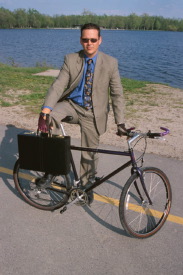 |
Write each sentence with the main verb in the past tense, negative: 5. They didn’t work yesterday because it was Sunday. (work) 6. She didn’t have any breakfast this morning. (have) 7. He didn’t do any work today. (do) 8. They didn’t go to any meetings last week. (go) | 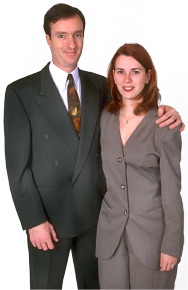 |
Answer each question with an affirmative short answer: (Yes, she….)
|  |
Answer each question with a negative short answer: (No, it…..)
|
|
Use the correct object pronoun for each sentence: 21. She’s looking at him. (a man) 22. He’s not looking at her. (a woman) 23. He’s looking at the apple. He wants it. 24. Do you know them? (the man and the woman) 25. They don’t know me. ( I / your teacher) |
|
Use the correct reflexive pronoun in each sentence or question: 26. He needs to be careful. He could hurt himself with that knife. 27. I cut myself with a knife last week. 28. Did you ever hurt yourself while cooking? 29. My wife burned herself when she grabbed the pan in the oven. |  |
Choose “much” or “many” to complete each sentence or question: 30. There aren’t very many apples on the table. 31. How much fruit is there? 32. How many oranges do you see? 33. All this fruit was on sale. It didn’t cost very much money. |  |
Choose “some” or “any” to complete each sentence: 34. They had some friends over for a party. 35. They ordered some pizza. 36. They didn’t buy any beer. 37. Their friends brought some wine. 38. No one wanted any pepperoni on the pizza. | 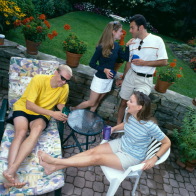 |
Choose the correct preposition to complete each sentence: 39. This apartment building is on a very busy street. 40. It’s located in a big city. 41. Jorge lives at 2143 Oak Street. 42. He’s not at home right now. 43. His building is on the ocean. | 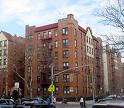 |
Use “will” and the main verb to form the future tense 44. We will leave early tomorrow morning. (leave) 45. The plane will probably arrive in Boston after 2:00 in the afternoon. (arrive) |  |
Use the main verb in the “going to” future tense: 46. Are they going to go for a walk? (go) 47. No, they aren’t going to go for a walk. (go) They are going to take a drive through the country. (take) 48. Who is going to drive? (drive) 49. Her husband is going to do the driving. (do) 50. Their son is going to sit in the back seat. (sit) |  |